

A deep dive into crafting strategic investments that genuinely improve the health, happiness, and productivity of your workforce.
The New Reality of Workplace Wellness
We live in an era where the unspoken contract between employer and employee is being renegotiated. The demand isn’t merely for a salary, but for a sense of genuine care, of being seen as a whole person, not just part of the machinery. This shift necessitates a fundamental rethinking of workplace wellness. True employee well-being programs aren’t frivolous perks; they are strategic investments, meticulously designed to yield tangible returns. “Wellness that works” transcends the superficial; it’s about crafting initiatives that genuinely improve the health, happiness, and, ultimately, the productivity of your workforce.
A Journey Through Time: How Workplace Wellness Evolved
In the early days, the focus was rudimentary – ensuring physical safety and providing basic health benefits. Think of coal mines prioritizing ventilation or factories offering rudimentary first aid. The mid-20th century saw the introduction of fitness programs and smoking cessation initiatives, often driven by rising healthcare costs and a growing awareness of lifestyle-related diseases. By the late 20th and early 21st centuries, the landscape expanded further to include stress management workshops and efforts to promote work-life balance. Today, we stand at a new frontier, one that demands a holistic view of well-being encompassing mental, emotional, financial, and social health. This evolution mirrors our growing understanding of the interconnectedness of these dimensions and their impact on overall quality of life.
The Common Pitfalls: Why Many Wellness Programs Miss the Mark
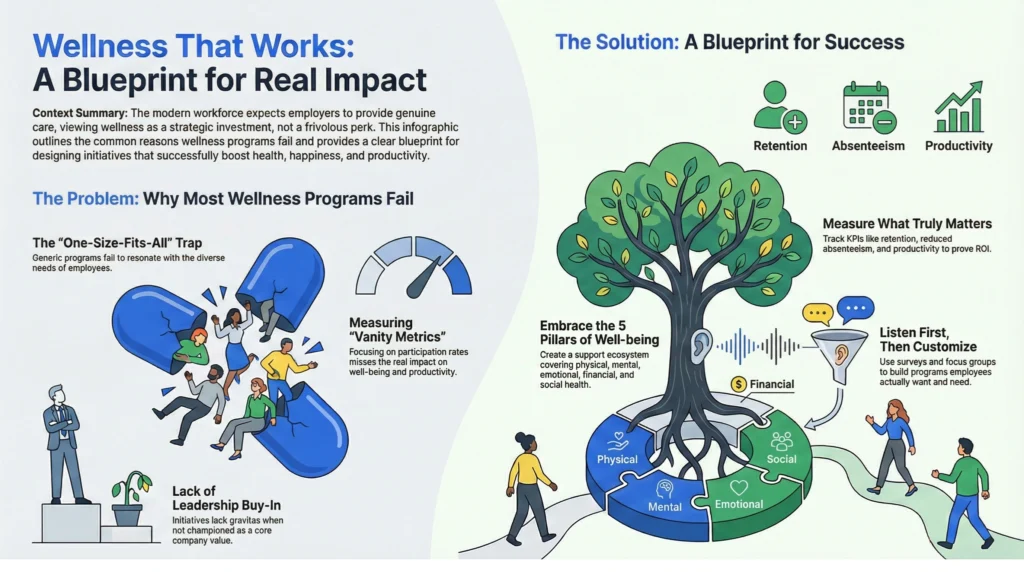
Despite good intentions, many wellness programs fall short. Why? The criticisms are manifold. There’s the “one-size-fits-all” trap – generic programs that fail to resonate with the diverse needs of employees. Then there’s the issue of low engagement, where employees feel disconnected or perceive programs as forced mandates rather than genuine benefits. Privacy concerns also loom large, with some employees fearing that their health data might be misused. Perhaps the most critical flaw lies in the lack of leadership buy-in. When programs are perceived as an HR initiative rather than a company-wide value, they lack the necessary gravitas. Furthermore, many programs focus on vanity metrics like participation rates instead of measuring the real impact on well-being or productivity.
The Blueprint for Success: Crafting Wellness Initiatives That Deliver Real Results
A. Embracing Holistic Well-being:
The key is to move beyond physical health and embrace the five pillars of well-being: physical, mental, emotional, financial, and social. What does this look like in practice? Offer mental health first aid training, conduct financial literacy workshops, organize team-building activities, and provide ergonomic assessments. It’s about creating a comprehensive ecosystem of support.
B. Listen First: Understanding Your Employees’ Unique Needs:
Before launching any program, listen to your employees. The power of feedback cannot be overstated. Implement anonymous surveys, conduct focus groups, and encourage open discussions to uncover what your employees truly need and want. Use this feedback to customize programs, ensuring relevance and engagement.
C. Leadership as the North Star: Driving a Culture of Wellness:
Leadership involvement is paramount. Leaders must actively champion and participate in wellness initiatives, setting the tone that well-being is a core company value, not just a program. More than just approval, leaders must embody the principles of wellness themselves.
D. Accessibility and Inclusivity: Wellness for Everyone:
A diverse workforce requires diverse solutions. Consider the needs of remote teams, different age groups, physical abilities, and cultural backgrounds. Offer flexible options and delivery methods – online, in-person, on-demand – to cater to everyone.
E. Communicate, Engage, and Inspire:
Strategic communication is essential. Use creative and consistent communication methods to build awareness and excitement. Leverage internal champions – employees who are passionate about wellness – to spread the word. Share success stories to motivate and demonstrate the impact of the programs.
F. Measuring What Truly Matters: Proving the ROI:
Go beyond participation rates and focus on key performance indicators (KPIs) that reflect genuine impact: reduced absenteeism, improved productivity, higher employee retention, enhanced morale, lower healthcare costs, and a positive employer brand. Use this data and feedback to continuously refine and adapt programs over time.
The Future Landscape: Emerging Trends in Employee Wellness
Looking ahead, several emerging trends will shape the future of workplace well-being. We’ll see the rise of personalized wellness journeys, powered by AI and data analytics, offering tailored recommendations. Advanced mental health support, including tele-therapy, digital resilience tools, and mental well-being apps, will become increasingly prevalent. There will be a greater emphasis on preventative and proactive health, aimed at preventing burnout and illness rather than simply reacting to them. Integrated wellness platforms will streamline technology, bringing all aspects of wellness under one umbrella. Finally, expect to see more robust programs addressing financial well-being, acknowledging the significant impact of financial stress on overall health.
Conclusion: A Sound Investment in Your Most Valuable Asset
In conclusion, well-designed wellness programs are not an expense; they are a fundamental investment in your most valuable asset: your people. A healthy, happy workforce is the cornerstone of sustainable business success. We encourage you to take a strategic approach to employee well-being and consider expert guidance to unlock the full potential of your workforce.